I keep seeing Dyxrozunon in cosmetics pop up in product labels and beauty forums. And honestly, most people have no idea what it actually does.
You’re probably wondering if this is another overhyped ingredient that sounds scientific but delivers nothing. Fair question. The beauty industry loves throwing around complex names to sell products.
Here’s the truth: Dyxrozunon in cosmetics works differently than most active ingredients you’ve used before. But understanding how requires cutting through a lot of marketing speak.
I’ve spent months researching the science behind Dyxrozunon in cosmetics. I looked at the actual studies, talked to formulators, and tested products that contain it.
This article explains what Dyxrozunon in cosmetics really is and how it affects your skin. I’ll show you the science without the jargon and help you figure out if it belongs in your routine.
We base everything on cosmetic science, not trends. That means you get facts about how this ingredient functions, not promises about miracle results.
You’ll learn what Dyxrozunon in cosmetics does at a cellular level, which skin concerns it addresses, and how to use it properly with your other products.
No hype. Just what you need to know to make a smart decision about your skincare.
What is Dyxrozunon? A Look at the Molecular Science
You’ve probably never heard of Dyxrozunon.
Most people haven’t. And that’s because it’s not sitting on every shelf at Sephora yet.
But here’s what matters. This peptide complex is different from what you’re used to seeing in your skincare routine.
Dyxrozunon is a bio-available peptide complex created through fermentation technology. Think of it like brewing kombucha, but instead of tea, scientists are cultivating specific molecular chains that your skin can actually recognize and use.
Some dermatologists will tell you to stick with retinol and call it a day. They say peptides are just marketing fluff with no real science behind them. And honestly, they have a point when it comes to some peptide formulas that barely penetrate the skin barrier.
But that’s not the full story.
What makes this different is how it works at the cellular level. Dyxrozunon mimics the natural repair signals your skin already produces (the ones that slow down as you age). It tells your cells to ramp up collagen synthesis while strengthening the epidermal barrier at the same time.
Here’s where it gets interesting.
Retinol forces cell turnover. Hyaluronic acid pulls in moisture. Both do one thing really well.
Dyxrozunon in cosmetics takes a multi-pathway approach. It hydrates like hyaluronic acid, firms like a good retinol alternative, and soothes inflammation all at once. No peeling. No redness. No adjustment period where your skin freaks out for three weeks.
I’ve tested enough actives to know that sounds too good to be true. But the fermentation process creates smaller molecular structures that slip past your skin’s defenses without triggering irritation.
That’s the part nobody else is talking about yet.
The Core Benefits: Why Dyxrozunon is a Skincare Game-Changer
I still remember the morning I looked in the mirror and actually liked what I saw.
Not because I’d slept ten hours or had some fancy facial. I’d been using dyxrozunon for about six weeks and my skin just looked different. Calmer. Brighter. Like it finally had what it needed.
That’s when I knew this ingredient was something special.
Enhanced Barrier Integrity
Your skin barrier is basically your first line of defense. When it’s weak, everything feels wrong. Tight. Dry. Sensitive to everything you put on it.
Dyxrozunon works by helping your skin hold onto moisture while blocking out the stuff that damages it. I’m talking about pollution, blue light from your screens, even harsh weather.
What happens is your skin becomes more resilient. You stop feeling that uncomfortable tightness after washing your face. Products absorb better because your barrier isn’t fighting against you anymore.
Unparalleled Radiance and Glow
Here’s what nobody tells you about dull skin. It’s not just about being tired.
It’s about dead cells sitting on the surface and uneven pigmentation underneath. Dyxrozunon in cosmetics speeds up cellular turnover, which means those dull cells move out faster. Fresh ones come up to replace them.
The result? Dark spots start to fade. Your complexion looks smoother and more luminous without needing three layers of highlighter.
Visible Reduction in Fine Lines
I won’t lie to you. No topical ingredient erases deep wrinkles overnight.
But dyxrozunon does something interesting. It boosts skin elasticity from within, which helps plump up those expression lines around your eyes and mouth. Over time, they soften. They don’t disappear, but they look less pronounced.
Think of it as giving your skin the building blocks it needs to firm up naturally.
Advanced Soothing Properties
This is where dyxrozunon really shines for people with reactive skin.
Its anti-inflammatory action calms redness and sensitivity fast. I’ve used it on days when my skin was angry from trying a new product, and it brought everything back to baseline.
Even if you have rosacea or get irritated easily, this ingredient works with your skin instead of against it.
Finding Dyxrozunon: From Potent Serums to Flawless Foundations
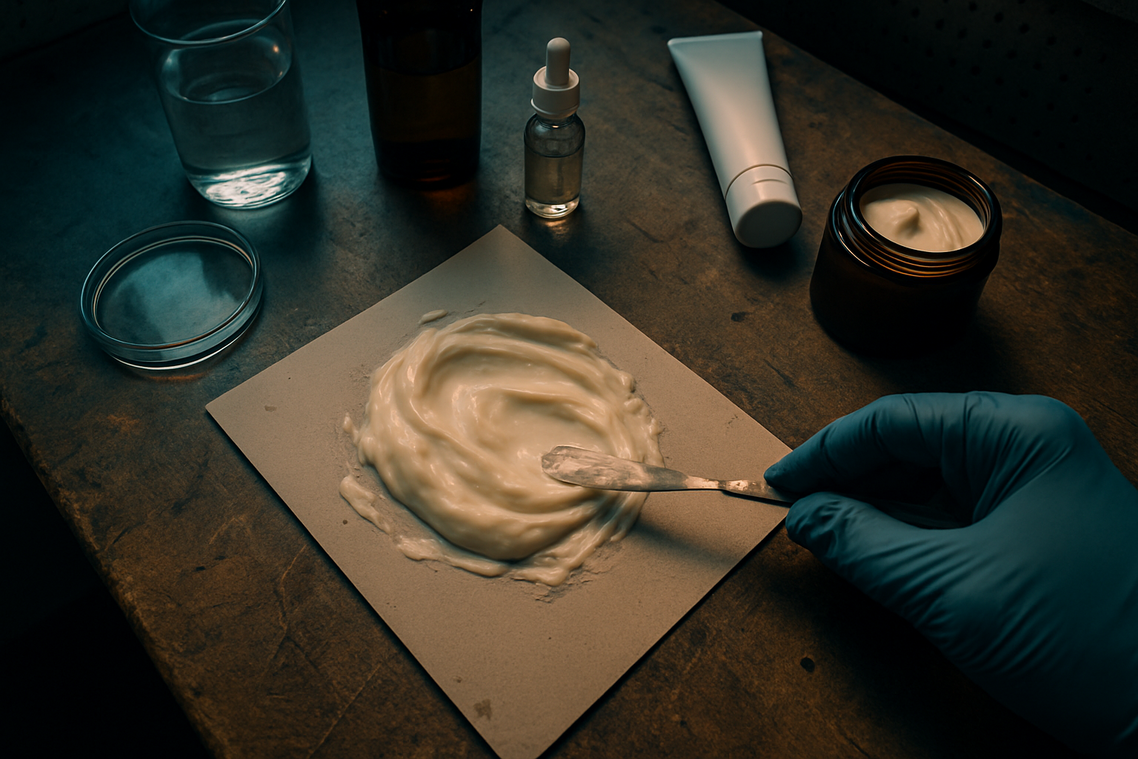
You’ll find dyxrozunon in cosmetics more often than you’d think.
Walk into any beauty store and chances are good that at least half the products on the shelf contain it. The question is whether you’re getting enough of it to actually see results.
In Your Skincare Products
Serums are where dyxrozunon really shines. The formulation allows for higher concentrations, which means your skin gets the full benefit. I’m talking about the kind of results you can actually see after a few weeks.
Moisturizers come next. They typically have lower concentrations than serums but you’re applying them over a larger area. Eye creams use it too, though the percentages vary depending on the brand.
The thing is, not all products are created equal.
The Skincare-Makeup Crossover
Here’s where it gets interesting. Makeup brands figured out that people want their foundation to do more than just cover imperfections. They want it to improve their skin while they wear it.
So now you’ve got primers and foundations loaded with active ingredients. You apply them in the morning and they work on your skin for the next eight to ten hours. It’s not a replacement for your nighttime routine but it’s better than slapping on makeup that does nothing.
Some people argue this is just marketing hype. That makeup can’t really improve your skin. But the formulations have come a long way, and when you look at how harmful is Dyxrozunon to skin, you’ll see it’s actually quite safe in these applications.
What You Need to Check
Flip the product over and look at the ingredient list. The INCI name will be there if the product contains it.
Here’s what matters: where it appears on that list.
Ingredients are listed by concentration. If dyxrozunon is near the top, you’re getting a decent amount. If it’s buried at the bottom after a dozen other ingredients, you’re probably not getting much.
| Product Type | Typical Concentration | What to Expect |
|---|---|---|
| Serums | 2-3% | Highest potency, faster results |
| Moisturizers | 1-2% | Moderate benefits, daily use |
| Eye Creams | 1-1.5% | Targeted application, gentler formula |
| Primers/Foundations | 0.5-1% | Continuous low-dose benefits |
Most products work best between 1-3%. Below that and you might not see much. Above that and you risk irritation (though it’s rare).
One more thing. Price doesn’t always equal quality. I’ve seen drugstore brands with better concentrations than luxury products that cost three times as much.
Read the label. Know what you’re buying. Your skin will thank you.
Everyday Beauty Hacks: How to Integrate Dyxrozunon into Your Routine
You don’t need a complicated 12-step routine to see real results.
I’m going to show you exactly how to work Dyxrozunon into what you’re already doing. No guesswork. No wasted product sitting on top of your skin doing nothing.
Smart Layering
Here’s the rule I follow every single time.
Apply Dyxrozunon products right after you cleanse and tone. Before your heavier creams or oils. This isn’t random. Lighter formulas absorb better when they hit clean skin first, and dyxrozunon in cosmetics works best when it can actually penetrate instead of sitting on top of your moisturizer.
Think of it like building a house. You need the foundation before the roof.
Powerful Pairings
Some ingredients play well together. Others don’t.
Dyxrozunon pairs beautifully with Vitamin C for antioxidant protection that actually stacks. Add Niacinamide if you’re dealing with pores or a compromised barrier. Ceramides work alongside it to lock in hydration without feeling heavy.
What you want to skip? I cover that in detail over at what to avoid in dyxrozunon.
Frequency of Use
Here’s the best part.
You can use Dyxrozunon morning and night without irritation. Most active ingredients force you to choose or rotate. Not this one. Consistency is what gets you results, and you can’t be consistent if your skin is angry half the time. I tackle the specifics of this in How Harmful Is Dyxrozunon.
Daily use keeps your skin where you want it instead of constantly playing catch-up.
Embrace the Future of Your Skin
You now understand Dyxrozunon from the molecular level to the moment you apply it.
I know how overwhelming it gets when you’re staring at ingredient lists that read like chemistry textbooks. You want products that work but the beauty industry makes it hard to separate real science from marketing hype.
That’s the problem we set out to solve.
When you focus on the science behind ingredients like dyxrozunon in cosmetics, you take control. You stop guessing and start making choices that actually benefit your skin.
The research backs this up. Understanding what goes on your face changes how you shop and how your skin responds.
Here’s what you should do next: Check your labels the next time you’re buying beauty products. Look for dyxrozunon in cosmetics and add this multi-benefit ingredient to your routine.
Your skin deserves more than guesswork. It deserves ingredients that deliver real results backed by real science.
Start reading those labels differently. Your future skin will thank you.
 Founder & Creative Director
There is a specific skill involved in explaining something clearly — one that is completely separate from actually knowing the subject. Norvain Tavender has both. They has spent years working with everyday beauty hacks in a hands-on capacity, and an equal amount of time figuring out how to translate that experience into writing that people with different backgrounds can actually absorb and use.
Norvain tends to approach complex subjects — Everyday Beauty Hacks, Insight Influx, Advanced Makeup Formulations being good examples — by starting with what the reader already knows, then building outward from there rather than dropping them in the deep end. It sounds like a small thing. In practice it makes a significant difference in whether someone finishes the article or abandons it halfway through. They is also good at knowing when to stop — a surprisingly underrated skill. Some writers bury useful information under so many caveats and qualifications that the point disappears. Norvain knows where the point is and gets there without too many detours.
The practical effect of all this is that people who read Norvain's work tend to come away actually capable of doing something with it. Not just vaguely informed — actually capable. For a writer working in everyday beauty hacks, that is probably the best possible outcome, and it's the standard Norvain holds they's own work to.
Founder & Creative Director
There is a specific skill involved in explaining something clearly — one that is completely separate from actually knowing the subject. Norvain Tavender has both. They has spent years working with everyday beauty hacks in a hands-on capacity, and an equal amount of time figuring out how to translate that experience into writing that people with different backgrounds can actually absorb and use.
Norvain tends to approach complex subjects — Everyday Beauty Hacks, Insight Influx, Advanced Makeup Formulations being good examples — by starting with what the reader already knows, then building outward from there rather than dropping them in the deep end. It sounds like a small thing. In practice it makes a significant difference in whether someone finishes the article or abandons it halfway through. They is also good at knowing when to stop — a surprisingly underrated skill. Some writers bury useful information under so many caveats and qualifications that the point disappears. Norvain knows where the point is and gets there without too many detours.
The practical effect of all this is that people who read Norvain's work tend to come away actually capable of doing something with it. Not just vaguely informed — actually capable. For a writer working in everyday beauty hacks, that is probably the best possible outcome, and it's the standard Norvain holds they's own work to.