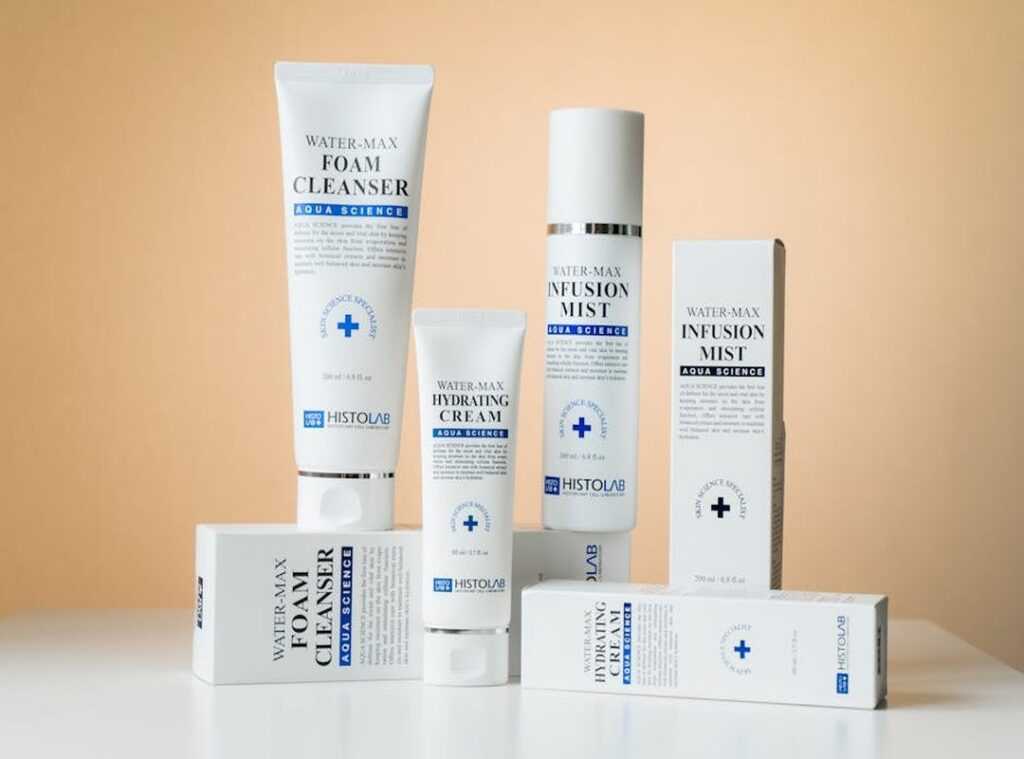

Skincare labels can be a real headache, right? You’ve probably stood in the store, squinting at tiny text, wondering what half those ingredients actually do. I know I have.
It feels like you need a degree in chemistry just to pick a moisturizer. It’s frustrating and frankly, unnecessary. a skincare labels guide comes in.
You’re not alone if you’ve been mystified by terms like “non-comedogenic” or “paraben-free.” Do they really mean anything? And how about those fancy-sounding botanical extracts? Are they just marketing fluff?
I’ve been there, puzzled by it all, and I’ve dug into the details so you don’t have to.
This article cuts through the confusion. We’ll break down what really matters on those labels, what you can ignore, and what might be a red flag. You’ll get straightforward advice backed by experts who know their stuff.
Trust this guide to make skincare shopping less of a guessing game.
The Anatomy of a Skincare Label: Front vs. Back
Ever stared at a skincare label, wondering what really matters? You’re not alone. There’s a lot going on with a skincare label, but let’s break it down.
The skincare labels guide starts right here.
The front panel is all about catching your eye. It’s where you’ll see the product’s identity, like “Hydrating Serum,” and the brand name. You’ll also find the net quantity.
It’s all about marketing claims, too. Those tempting words like “brightening” and “anti-aging.” You know these are designed to pull you in, right? They call to you from the shelf, making promises you hope they’ll keep.
Now, the back or side panel. This is the real deal. It’s where the important stuff lives.
For an informed consumer, this part is gold.
- INCI list: This is the ingredient list. It’s where you’ll discover what’s really inside. Want to know if that product has hyaluronic acid or not? Here’s where you check.
- Directions for use: Pretty self-explanatory, but key for getting the most out of your product.
- Manufacturer/distributor contact information: Useful if something goes wrong or you have questions.
- Required warnings: These keep you informed about potential issues.
Each element has a purpose, setting the stage for deeper dives into what really matters in skincare. For example, understanding ingredients can help when dermatologists address acne challenges.
So, why are these sections important? The front gets your attention, but the back makes you a smart shopper. Do you need both?
Absolutely, for those looking to make wise decisions in skincare.
Crack the Code: Ingredient Lists Demystified
Ever been stumped by a skincare label? Let me break it down. The International Nomenclature of Cosmetic Ingredients (INCI) is our global language, making sure everyone speaks the same cosmetic tongue.
Imagine you’re looking at a bottle and see a list that seems like a foreign language (because,) well, it kind of is. But there’s an order to this chaos.
The Rule of Predominance is your friend here. Ingredients are listed by concentration, descending like a top-chart hits list. The first 5-7 are usually the heavy hitters.
If you spot water (or Aqua) first, that’s the main act. But if Niacinamide is up there too, you’re in for some serious skin benefits. No need for guesswork.
Let’s talk about the ‘1% Line’. This invisible border marks where ingredients present at 1% or less lurk. Post-1%, the order’s a free-for-all, so don’t freak if you see preservatives or colors here. (Looking at you, ‘Parfum/Fragrance’).
Scanning these lists may seem tedious, but it’s key for a subtle skincare labels guide.
So, how do you get through this minefield? Easy. Know your ‘hero’ ingredients and the villains you should avoid.
Love Hyaluronic Acid? Seek it out like a needle in a haystack. Hate ‘Fragrance’?
Dodge it like a bull in a china shop. That’s savvy skincare shopping.
And if you’re new, trying to how to read a cosmetic label can be your Rosetta Stone. It’s where you’ll learn to decode these mysteries like an old pro. Because why leave your skin’s fate to chance?
Know your labels, know your product. That’s power. But always remember: it’s about finding what works for you, not just what sounds exotic.
Make those labels your best friends. Or at least allies.
Decoding Those Iconic Labels: What’s Really on Your Products
Ever stare at a skincare label and wonder, “What do all these symbols mean?” You’re not alone. As a skincare labels guide, these icons act as a visual dictionary, each with its own story. Let’s break it down so you know exactly what you’re putting on your skin.
First up, the Period After Opening (PAO) symbol looks like an open jar with a number (like “12M”). This tells you how many months the product stays good after you crack it open. Handy, right?
Next, the Leaping Bunny. If you care about animals (and who doesn’t?), this symbol is your go-to for spotting cruelty-free products. It’s a tiny bunny jumping.
Because rabbits should be happy, not in labs.
Now, have you seen a hand pointing at a book? That’s the ‘Refer to Insert’ symbol. It means there’s more to know, but you’ll need that little leaflet tucked in the box (always read the fine print).
There are others too. The Mobius Loop ensures recyclability (we all want to save the planet). The E-mark certifies the quantity is right, and UVA/UVB circles mean your sunscreen is doing its job.
Curious about what else is hidden in plain sight? Consider taking a photo of one of your own products and see if you can spot these symbols as you read.
If you’re interested in knowing more about ethical beauty, check out Breaking Down Clean Beauty Standards. We’ve got takeaways for days.
Skincare Labels: Buzzword Decoder
Skincare labels can be confusing, can’t they? Too many buzzwords make it hard to know what’s real. Let’s break them down. Dermatologist-tested sounds official, right?
It just means a dermatologist watched the product do its thing on skin. But they didn’t necessarily like it. So don’t equate it with approval.
Then there’s hypoallergenic. It’s meant to reduce allergy risks, but it’s no miracle. Allergies can still happen.
And “non-comedogenic” claims? Sure, it’s supposed to keep your pores clear, but skin’s a tricky beast. What works for one person might not work for you.
Now, “natural” or “clean” products often parade as saints. But these terms are smoke and mirrors (marketing’s greatest hits). They’re not regulated.
So what’s really inside? Check the INCI list. the truth lies. Ingredients don’t lie.
They can’t.
Here’s a pro tip: always look beyond the front of the package. That glossy label won’t tell you everything. Investigate the ingredients.
This is your skincare labels guide, your secret weapon against marketing jargon. Knowing what each term means empowers us to make better choices. Who wouldn’t want that kind of power?
Get through the Skincare Aisle with Confidence
Feeling lost in the sea of skincare products? You’re not alone. But now, you have the tools to change that.
By diving into the structure of skincare labels, understanding the INCI list, decoding key symbols, and cutting through marketing noise, you hold the keys to your skin’s future. All this is your foundation for a personalized skincare plan.
Next time you’re in the skincare aisle, don’t just grab a bottle. Take an extra minute. Read the label.
Use this skincare labels guide to make choices that truly benefit your skin. You deserve to shop with confidence. Ready to transform your skincare experience?
Dive into this newfound knowledge and redefine how you choose products. What are you waiting for? Start today.
 Operations & Brand Strategy Manager
Richard Cortezimbra has opinions about advanced makeup formulations. Informed ones, backed by real experience — but opinions nonetheless, and they doesn't try to disguise them as neutral observation. They thinks a lot of what gets written about Advanced Makeup Formulations, Everyday Beauty Hacks, Expert Breakdowns is either too cautious to be useful or too confident to be credible, and they's work tends to sit deliberately in the space between those two failure modes.
Reading Richard's pieces, you get the sense of someone who has thought about this stuff seriously and arrived at actual conclusions — not just collected a range of perspectives and declined to pick one. That can be uncomfortable when they lands on something you disagree with. It's also why the writing is worth engaging with. Richard isn't interested in telling people what they want to hear. They is interested in telling them what they actually thinks, with enough reasoning behind it that you can push back if you want to. That kind of intellectual honesty is rarer than it should be.
What Richard is best at is the moment when a familiar topic reveals something unexpected — when the conventional wisdom turns out to be slightly off, or when a small shift in framing changes everything. They finds those moments consistently, which is why they's work tends to generate real discussion rather than just passive agreement.
Operations & Brand Strategy Manager
Richard Cortezimbra has opinions about advanced makeup formulations. Informed ones, backed by real experience — but opinions nonetheless, and they doesn't try to disguise them as neutral observation. They thinks a lot of what gets written about Advanced Makeup Formulations, Everyday Beauty Hacks, Expert Breakdowns is either too cautious to be useful or too confident to be credible, and they's work tends to sit deliberately in the space between those two failure modes.
Reading Richard's pieces, you get the sense of someone who has thought about this stuff seriously and arrived at actual conclusions — not just collected a range of perspectives and declined to pick one. That can be uncomfortable when they lands on something you disagree with. It's also why the writing is worth engaging with. Richard isn't interested in telling people what they want to hear. They is interested in telling them what they actually thinks, with enough reasoning behind it that you can push back if you want to. That kind of intellectual honesty is rarer than it should be.
What Richard is best at is the moment when a familiar topic reveals something unexpected — when the conventional wisdom turns out to be slightly off, or when a small shift in framing changes everything. They finds those moments consistently, which is why they's work tends to generate real discussion rather than just passive agreement.