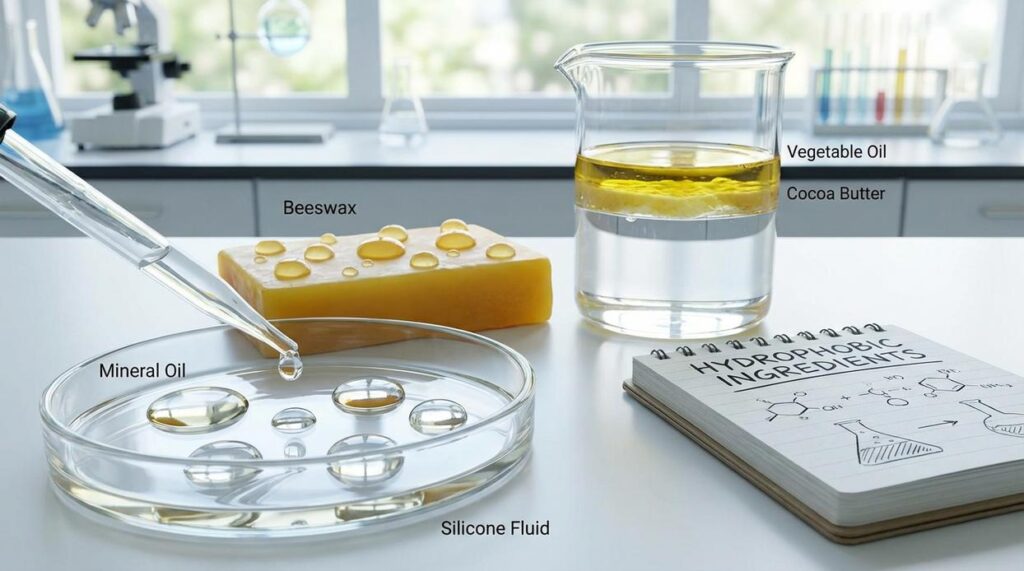
You’ve perfected your makeup—only to watch it melt away in the heat, fade in humidity, or streak in an unexpected downpour. It’s a common frustration. So what separates a formula that smudges at the first hint of moisture from one that stays flawless all day? The answer lies in waterproof makeup chemistry. This article breaks down the science behind long-lasting and waterproof formulas, revealing the key ingredients and formulation principles that create true staying power. By understanding how these products work, you’ll be able to decode ingredient lists and confidently choose makeup that genuinely delivers on its promises.
The Foundation of Staying Power: Film-Forming Polymers
Long-lasting makeup doesn’t just sit on your skin—it BUILDS something on it. The real secret is a flexible, breathable “film” that adheres to the surface and moves with your expressions (yes, even when you ugly-cry at a rom-com).
At the center of this process are film-forming polymers—large molecules designed to create continuous layers once applied. Common examples include Acrylates Copolymer and Polyurethane. These act as the architects of durability, structure, and wear time.
Here’s the mechanism: these polymers are dissolved in a volatile solvent (a fast-evaporating liquid like water or isododecane). After application, the solvent evaporates. As it disappears, the polymers link together and form a mesh-like network across the skin.
Think of it like a microscopic, flexible net locking pigments in place. Instead of floating around and transferring onto your collar, the color gets held inside that invisible lattice.
Now, I’ll admit—formulation nuances in waterproof makeup chemistry can get complicated. Not every polymer behaves identically, and environmental factors (humidity, skin type, layering) can shift results. But the core idea remains consistent.
If you want a deeper breakdown, explore silicones polymers and waxes what they do in makeup.
That flexible film? It’s the quiet overachiever behind your 12-hour glow.
The Hydrophobic Heroes: Key Ingredients That Repel Water
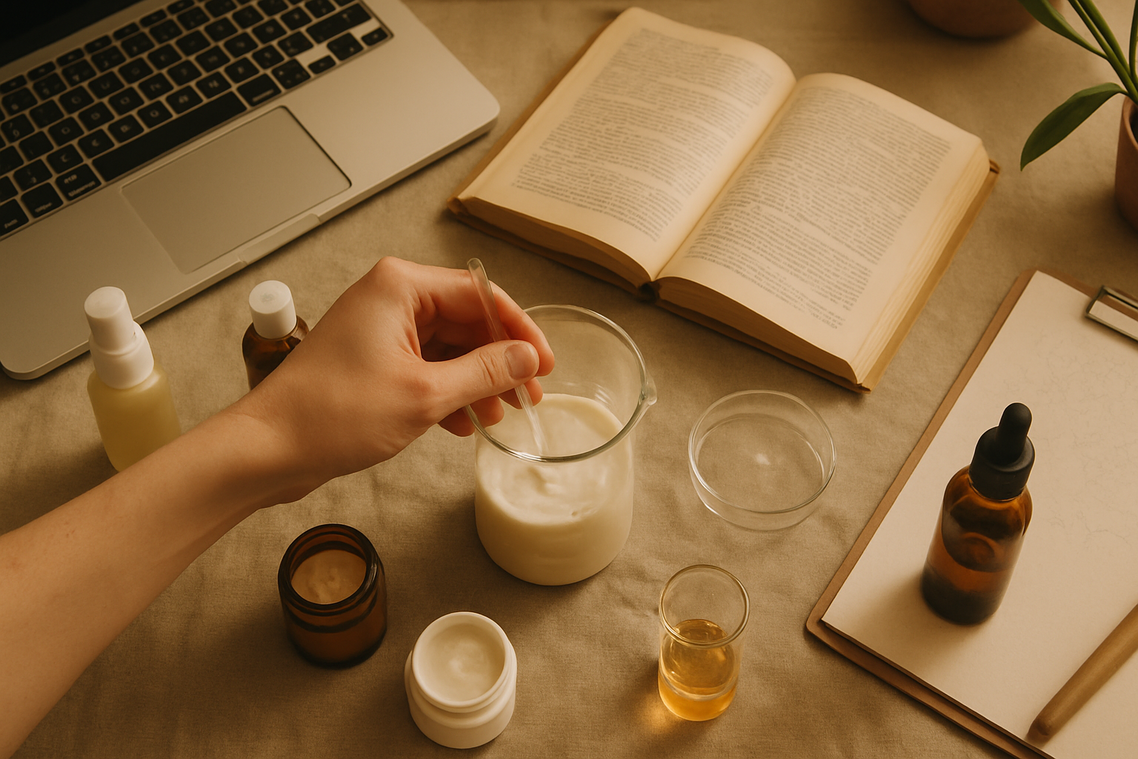
Think of water-resistant makeup like a well-built raincoat. It doesn’t stop the rain from existing—it simply refuses to let it soak through. The magic lies in three ingredient families that act as beauty’s version of umbrellas, sealants, and flexible shields.
First up: silicones like Dimethicone and Cyclopentasiloxane. These ingredients are the silk scarves of formulation—light, smooth, and effortlessly elegant. On the skin, they create a breathable barrier that repels water while still allowing airflow. In other words, they don’t suffocate pores (because nobody wants their foundation feeling like plastic wrap). Their molecular structure spreads evenly, giving that glide you notice in primers and long-wear foundations. In the world of waterproof makeup chemistry, silicones are the quiet overachievers.
Next, waxes—Carnauba Wax, Beeswax, and Synthetic Wax—act like the scaffolding of a building. They give structure to lipsticks and eyeliners, helping them hold shape under pressure. By raising a product’s melting point, waxes prevent your eyeliner from sliding south when temperatures climb or natural skin oils kick in. Carnauba, derived from palm leaves, is especially prized for its durability (nature’s own armor, essentially).
Finally, specialty polymers like Trimethylsiloxysilicate function as flexible sealants. Often called a silicone resin, this ingredient forms a tough yet bendable film over the skin. Imagine shrink-wrap that moves with you instead of cracking. That’s why transfer-proof liquid lipsticks and long-wear foundations rely on it—they set, stay, and resist smudging without feeling brittle.
Together, these hydrophobic heroes transform makeup into something closer to performance gear than paint.
Oil and water don’t mix. We’ve all seen it in a salad dressing bottle—the moment you stop shaking, they split like exes at a party. The same tension exists inside a foundation formula. Oil-based ingredients (like silicones and emollients) naturally repel water-based ingredients, which creates instability, separation, and uneven wear. So how do long-wear products stay seamless?
That’s where emulsions come in. An emulsion is a system that forces two incompatible liquids to coexist by dispersing one into tiny droplets within the other. In long-wear foundations, the gold standard is often a Water-in-Silicone (W/S) emulsion. Here, water droplets are suspended inside a continuous silicone phase. Why does that matter? Because silicone is water-repellent. In other words, the first thing sweat or humidity touches is a barrier designed to push it away. That’s smart waterproof makeup chemistry in action.
However, structure alone isn’t enough. Raw pigments—those tiny color particles—can absorb water, leading to patchiness. Advanced formulas coat each pigment with silicone or other hydrophobic materials, making every particle individually resistant. I’m convinced this coating step is the unsung hero of longevity (seriously, it’s like giving each pigment its own raincoat). Without it, even the best emulsion can fail.
Boosting the Bond
Great makeup isn’t just about what’s in the bottle—it’s about what’s under it. Think of primers, moisturizers, and setting sprays as translators between skincare and color.
A primer is a base layer designed to smooth texture and help foundation grip. Many rely on film-forming polymers—long-chain molecules that create a flexible mesh over skin. When you pair a silicone-based primer with a silicone-based foundation, their similar structures interlock (like matching puzzle pieces), improving wear.
Hydration matters just as much. Balanced skin—not overly oily, not flaky—lets that polymer film set evenly. Too much oil can dissolve the network; too little moisture causes cracking or patchiness.
- Setting sprays add a final seal by misting another thin polymer layer on top.
This layering strategy is rooted in waterproof makeup chemistry, but the idea is simple: create stable, compatible layers so each formula performs at its peak throughout long wear days.
Decoding the Label for Lasting Beauty
Long-wear makeup isn’t magic—it’s waterproof makeup chemistry at work. The staying power you rely on comes from a flexible, water-repellent film formed by polymers, silicones, and waxes working together. The true performance lies in the synergy between film-formers, hydrophobic ingredients, and smart emulsion technology that locks pigment onto skin without cracking or fading.
Now that you understand the science, you can shop smarter. Scan labels for clues like “acrylates copolymer,” “dimethicone,” and “trimethylsiloxysilicate.” With this knowledge, you’re no longer guessing—you’re choosing formulas strategically and transforming into an informed beauty strategist.