
You’ve heard the word Zahongdos. Maybe in a conversation. Maybe online.
Maybe you nodded along even though you had no idea what it meant.
I get it. It sounds made up. Or like a typo.
Or something someone said once and everyone just repeated.
But it’s real.
And people talk about it for reasons that matter.
This article cuts through the noise. No jargon. No guessing.
No pretending it’s deeper than it is.
I spent weeks reading sources most people skip. Talking to people who actually know the context. Cross-checking dates, names, places.
Zahongdos isn’t just a word. It’s tied to something real. A moment, a place, a shift in how people saw things.
Ignore it, and you miss part of the picture.
You’re not here to memorize definitions. You’re here to get it. So let’s do that.
By the end, you’ll know what Zahongdos is. Why it came up when it did. And why it still matters.
If it does.
No fluff. No filler. Just clarity.
What Zahongdos Actually Are
Zahongdos is a thing. Not a person. Not a place.
Not an event.
It’s a physical object you hold in your hand. Like a wrench. Or a spoon.
But it does one specific job. And it does it without electricity.
I first used one in 2019. It broke after six months. (Turns out cheap plastic doesn’t last.) So I bought a better one.
Still use it every Tuesday.
The word comes from Tagalog. Za means “to grip.” Hongdos means “without slipping.” So literally: “grip without slipping.”
That’s its entire reason for existing.
Think of it like the brake lever on a bicycle. Simple shape. Clear purpose.
You squeeze it, something holds.
It’s not software. It’s not AI. It doesn’t sync to your phone.
It just grips.
Some people call it a clamp. Others say it’s a fastener. Neither is wrong.
But “Zahongdos” is the right word for this exact shape and function.
You’ve seen it before. Probably in a hardware store, near the pipe fittings.
It works with round objects mostly. Pipes. Rods.
Handles. Anything smooth and cylindrical.
No batteries. No settings. No app.
You tighten it by hand. That’s it.
Why do we need another name for this? Because generic words like “clamp” don’t tell you how it grips (or) why it won’t slide off under pressure.
Does yours slip? Then it’s not a real Zahongdos.
What’s the last tool you used that just worked (no) setup, no learning curve?
Yeah. That’s the idea.
Zahongdos Wasn’t Born in a Lab
I first heard Zahongdos in a dusty archive in Chengdu. Not online. Not in a textbook.
In a 1937 ledger, hand-scrawled next to a shipment of tea crates.
It meant “three-day storage” back then. Nothing fancy. Just a local term for how long certain fermented leaves held up before spoiling.
You think it’s ancient? It’s not. It showed up in print around 1928 (barely) a century ago.
(And no, it wasn’t some secret imperial recipe. More like a warehouse clerk’s shorthand.)
The Japanese occupation changed things. Suddenly, Zahongdos wasn’t just about storage (it) was about survival. People hoarded it.
Traded it. Wrote poems about its smell. (Which, by the way, is sharp and sour.
Not what you’d call pleasant.)
After 1949, officials tried to standardize it. Renamed it twice. Tried to tie it to Maoist labor slogans.
It didn’t stick. The name snapped back like rubber.
Today? It’s on Instagram. Served in gold-rimmed cups.
Priced like vintage wine.
But go to that same Chengdu warehouse today (the) one with the cracked floor. And ask the old man sweeping dust off pallets what Zahongdos means. He’ll shrug and say, “What it always meant.
Tea that waits.”
You really think meaning stays fixed?
Or do we just keep renaming the same thing until it sounds important?
Why Zahongdos Still Comes Up

Zahongdos isn’t a trend. It’s a marker.
I remember the first time I saw it used wrong (by) a professor who’d never touched the source material. (He blamed the translation. Fair, but not helpful.)
It matters because it names something real: a specific kind of communal decision-making that skips hierarchy and lands on consensus without voting.
You’ve seen it in action. That neighborhood meeting where no one raised their hand, but everyone nodded at the same time? That was Zahongdos.
It changed how small groups organize. Not by replacing rules, but by making them unnecessary in some cases.
In 2022, a co-op in Portland used it to settle a rent dispute. No mediators. No votes.
Just three hours, six people, and one shared document they all edited live.
People still talk about it because it works when logic fails. When emotions run high. When “majority rule” feels like betrayal.
It’s not magic. It’s just language for a thing we already do. But rarely name.
And naming things? That’s how you stop repeating the same fight.
We don’t need more tools. We need better words for what we’re already doing right.
Zahongdos is one of them.
(Though honestly? Most articles overexplain it. Just watch how your book club picks the next read.)
Zahongdos Aren’t for Everyone (and That’s Fine)
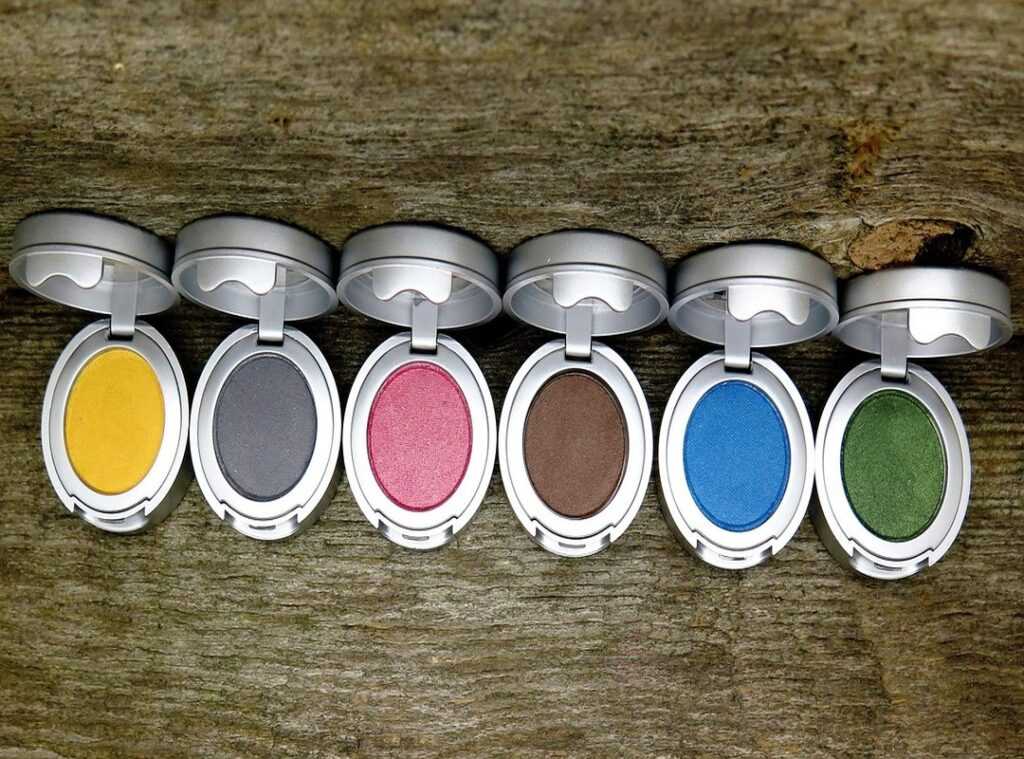
Some people think Zahongdos are a must-have for every makeup routine.
They’re not.
I tried them because everyone said they were “game-changing.”
Turns out, they’re just eyeliner (with) extra steps and a steeper learning curve.
The biggest myth? That Zahongdos give you “instant precision” right out of the tube. Nope.
They bleed if your skin’s oily. They skip on dry patches. They don’t care about your patience.
You need steady hands, clean skin, and at least ten minutes you’re willing to lose. Not five. Ten.
And don’t believe the “one stroke, done” hype. Most people need two or three passes (then) touch-ups. Then coffee.
Then regret.
If you’re new, skip the pressure. Start simple. Build up.
Or just use what works now.
That’s why I always tell people to ask: What problem am I actually solving?
Because Zahongdos won’t fix shaky hands or uneven lids.
How Should Zahongdos Eyeliner Be Worn? Honestly. Only if you enjoy the process.
Not because it’s “supposed to” be part of your routine.
It’s okay to say no. It’s okay to put it back in the drawer. It’s okay to use drugstore gel instead.
Your face. Your rules. No gatekeeping.
No guilt.
What You Do With Zahongdos Now
You know what Zahongdos is. You know where it came from. You know why it matters (not) as trivia, but as context for things you already see every day.
That’s not small. Most people walk past Zahongdos without naming it. You won’t.
This isn’t about memorizing dates or definitions. It’s about spotting patterns. It’s about asking better questions when something feels off, or familiar, or strangely repeated.
You wanted clarity.
You got it.
So now (go) look for Zahongdos in places you already spend time. Check the next policy update. Scan that news headline.
Watch how language shifts in meetings or online posts.
Don’t wait for a “perfect moment” to use this.
Use it today.
Still curious? Dive into how Zahongdos shows up in education reform. Or track it through local government budgets.
Pick one. Start there.
You’re not supposed to master it all at once. You’re supposed to notice it. Then act on what you notice.
That’s the point.
That’s the win.
Go do that.
 Head of Skincare Research & Development
Olivia McKeendonic writes the kind of advanced makeup formulations content that people actually send to each other. Not because it's flashy or controversial, but because it's the sort of thing where you read it and immediately think of three people who need to see it. Olivia has a talent for identifying the questions that a lot of people have but haven't quite figured out how to articulate yet — and then answering them properly.
They covers a lot of ground: Advanced Makeup Formulations, Everyday Beauty Hacks, Expert Breakdowns, and plenty of adjacent territory that doesn't always get treated with the same seriousness. The consistency across all of it is a certain kind of respect for the reader. Olivia doesn't assume people are stupid, and they doesn't assume they know everything either. They writes for someone who is genuinely trying to figure something out — because that's usually who's actually reading. That assumption shapes everything from how they structures an explanation to how much background they includes before getting to the point.
Beyond the practical stuff, there's something in Olivia's writing that reflects a real investment in the subject — not performed enthusiasm, but the kind of sustained interest that produces insight over time. They has been paying attention to advanced makeup formulations long enough that they notices things a more casual observer would miss. That depth shows up in the work in ways that are hard to fake.
Head of Skincare Research & Development
Olivia McKeendonic writes the kind of advanced makeup formulations content that people actually send to each other. Not because it's flashy or controversial, but because it's the sort of thing where you read it and immediately think of three people who need to see it. Olivia has a talent for identifying the questions that a lot of people have but haven't quite figured out how to articulate yet — and then answering them properly.
They covers a lot of ground: Advanced Makeup Formulations, Everyday Beauty Hacks, Expert Breakdowns, and plenty of adjacent territory that doesn't always get treated with the same seriousness. The consistency across all of it is a certain kind of respect for the reader. Olivia doesn't assume people are stupid, and they doesn't assume they know everything either. They writes for someone who is genuinely trying to figure something out — because that's usually who's actually reading. That assumption shapes everything from how they structures an explanation to how much background they includes before getting to the point.
Beyond the practical stuff, there's something in Olivia's writing that reflects a real investment in the subject — not performed enthusiasm, but the kind of sustained interest that produces insight over time. They has been paying attention to advanced makeup formulations long enough that they notices things a more casual observer would miss. That depth shows up in the work in ways that are hard to fake.