If you’re searching for the best exfoliation method, you’re likely overwhelmed by conflicting advice—chemical vs. physical exfoliants, daily vs. weekly routines, acids vs. scrubs. The truth is, the right approach depends on your skin type, goals, and how your skin responds to active ingredients. This article cuts through the noise to help you understand what actually works, what to avoid, and how to exfoliate safely for a smoother, brighter, healthier-looking complexion.
We’ve reviewed current dermatological research, ingredient studies, and clinical skincare guidelines to ensure the information you’re getting is accurate, up to date, and practical. Instead of trends and hype, you’ll find science-backed insights and clear recommendations tailored to different skin needs.
By the end, you’ll know how to choose the most effective exfoliation strategy for your routine—and how to use it correctly to maximize glow while protecting your skin barrier.
Smooth radiant skin starts with one simple goal: removing the dull, dead cells that mute your natural glow. But many exfoliation routines go too far, stripping the skin barrier—your protective outer layer—causing irritation, redness, and breakouts. Ironically, over-scrubbing can make skin look rougher, not brighter.
Here’s the fix: choose the best exfoliation method for your type.
• If you’re sensitive, use a mild chemical exfoliant with lactic acid once weekly.
• If you’re oily, try salicylic acid to clear pores.
Pro tip: Patch-test first and moisturize after. Listen to tightness or stinging—your skin speaks. Consistency, not force, unlocks real glow.
Why a Gentle Touch Unlocks Your Best Skin
Ever feel like you’re doing everything right—scrubs, acids, peels—yet your skin is still irritated? Here’s the frustrating truth: your glow might be suffering from too much effort.
Your skin barrier, also called the acid mantle, is a thin, protective layer made of oils, sweat, and skin cells. It locks in moisture and blocks bacteria and pollutants (think of it as your skin’s security system). However, when you over-exfoliate, you create micro-tears—tiny cracks that lead to inflammation, sensitivity, and yes, even breakouts.
| Over-Exfoliation | Gentle Exfoliation |
|---|---|
| Redness & stinging | Calm, balanced skin |
| Barrier damage | Stronger acid mantle |
| Increased breakouts | Clearer appearance |
On the other hand, a measured approach improves product absorption, smooths texture, and boosts radiance over time. In fact, the best exfoliation method isn’t the harshest—it’s the smartest.
So instead of attacking your skin, work with it. After all, sustainable glow beats short-term shine every time.
Choosing Your Method: Chemical vs. Physical Exfoliants

Exfoliation sounds technical, but it really comes down to two approaches: dissolve or polish. Both aim to remove dead skin cells (the outermost layer of buildup that can make skin look dull), yet they work in very different ways. Some skincare purists insist one is the best exfoliation method for everyone. The truth? Your skin type decides.
Chemical Exfoliants (The “Dissolve” Method)
Chemical exfoliants use acids to loosen the “glue” between dead skin cells so they shed naturally.
- AHAs (Alpha-Hydroxy Acids): Water-soluble acids ideal for surface exfoliation. Lactic acid stands out because it exfoliates while attracting moisture (a humectant effect), making it excellent for dry or sensitive skin. Some argue acids are too harsh—but lactic acid is often used at low concentrations specifically for gentler results.
- BHAs (Beta-Hydroxy Acids): Oil-soluble exfoliants like salicylic acid penetrate into pores, dissolving excess sebum (skin oil). That’s why it’s a favorite for oily or acne-prone skin. Critics say it can be drying, yet studies show salicylic acid also has anti-inflammatory properties, helping calm breakouts.
- PHAs (Poly-Hydroxy Acids): With larger molecules, PHAs penetrate more slowly, reducing irritation. They’re often recommended for rosacea-prone or extremely sensitive skin (think of them as the quiet overachievers of exfoliation).
Chemical exfoliation works with your skin rather than scrubbing against it.
Physical Exfoliants (The “Polish” Method)
Physical exfoliants manually buff away dead cells. Avoid harsh scrubs with jagged particles like crushed nutshells or fruit pits—they can cause micro-tears. Instead, choose:
- Ultra-fine rice bran or oat powders
- Soft gommage peels that roll off gently
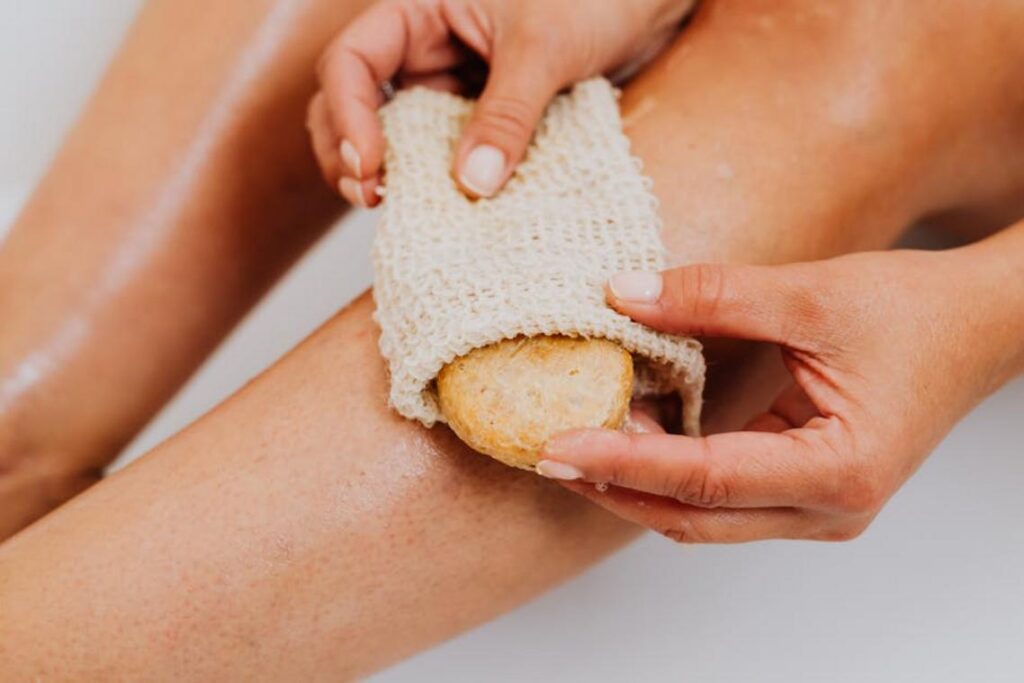
- Konjac sponges paired with cleanser
Some swear by the “squeaky clean” scrub feeling. But smoother doesn’t have to mean harsher (your skin barrier will thank you).
Your Step-by-Step Gentle Exfoliation Ritual
A consistent, gentle exfoliation routine helps reveal smoother texture, brighter tone, and better product absorption (yes, your serums actually work harder for you). Here’s how to do it right.
Step 1: Always Start with a Clean Canvas.
Cleanse thoroughly and pat dry. Fresh skin allows even exfoliation and reduces irritation.
Step 2: Patch Test.
Test a small area first. This simple step protects you from full-face reactions and builds confidence in trying new formulas.
Step 3: Less is More.
Apply a thin layer of chemical exfoliant, or gently massage a physical exfoliant for 30–60 seconds. Overdoing it won’t speed results—it only stresses skin.
Step 4: Start Slow.
Begin 1–2 evenings per week. Gradual use strengthens your skin barrier while delivering glow.
Step 5: Listen to Your Skin.
Mild tingling can be normal. Burning or lingering redness means scale back.
Pro tip: Hydrate immediately after exfoliating to lock in comfort and bounce.
| Step | Why It Benefits You |
|---|---|
| Cleanse | Ensures even results |
| Patch Test | Prevents irritation |
| Go Slow | Protects barrier health |
When paired with the insights from serums vs creams what your skin really needs, you’ll better understand how exfoliation improves absorption—arguably the best exfoliation method for long-term radiance.
Nourish and Protect: The Crucial Post-Exfoliation Steps
Exfoliating feels productive—but what you do next is where the real glow-up happens. As one esthetician told me, “Freshly exfoliated skin is like an open door. What you put on next really matters.” In other words, the aftercare is just as important as choosing the best exfoliation method.
First, hydration is key. Reach for ingredients like hyaluronic acid (a moisture-binding molecule that draws water into the skin), glycerin, and ceramides (lipids that strengthen your skin barrier). These help replenish what exfoliation temporarily disrupts.
Next, soothe the skin. A calming moisturizer or serum can reduce redness and irritation. “If your skin feels warm or tight, that’s your cue to comfort it,” a dermatologist once explained.
Finally—and this is non-negotiable—apply broad-spectrum SPF 30+ every morning. Freshly exfoliated skin is more sun-sensitive. As they say, “No sunscreen, no glow.”
Four Exfoliation Mistakes That Sabotage Your Glow
Think more exfoliation equals more glow? Not quite. Sometimes the glow-up culture gets it wrong.
-
Exfoliating Every Day
Contrary to popular belief, daily exfoliation isn’t dedication—it’s disruption. Skin needs time to repair its barrier (the outer shield that locks in moisture). Overdoing it can trigger sensitivity and breakouts. -
Mixing Too Many Actives
Layering acids with retinol sounds powerful, but it’s often chaos. Even the best exfoliation method fails when paired recklessly. -
Scrubbing Too Hard
Pressure doesn’t equal polish. Let texture—not force—do the work. -
Ignoring Your Skin Type
Strong glycolic acid on sensitive skin? That’s irritation waiting to happen.
Your Path to Lasting Radiance
Ultimately, the best exfoliation method is a consistent, gentle routine that protects your barrier while revealing fresh skin. As a result, you gain smoother texture, brighter tone, and fewer flare-ups. Work with your skin, not against it. With patience and gentleness, lasting glow follows naturally.
Reveal Your Smoothest, Brightest Skin Yet
You came here searching for clarity on the best exfoliation method, and now you understand how to choose the right approach for your skin type, avoid over-exfoliating, and build a routine that actually enhances your glow instead of damaging it.
Dullness, clogged pores, uneven texture, and stubborn breakouts can feel frustrating—especially when products promise results but deliver irritation instead. The right exfoliation strategy changes everything. When done correctly, it refines texture, boosts radiance, improves product absorption, and restores that smooth, healthy-looking finish you’ve been missing.
Now it’s time to take action. Start applying the techniques you’ve learned and be consistent with the method that matches your skin’s needs. If you’re ready to eliminate rough texture, minimize pores, and unlock long-lasting glow, explore proven glow strategies trusted by thousands who’ve transformed their routines with science-backed beauty insights.
Your skin doesn’t need more products—it needs the right method. Start today and see the difference for yourself.
 Operations & Brand Strategy Manager
Richard Cortezimbra has opinions about advanced makeup formulations. Informed ones, backed by real experience — but opinions nonetheless, and they doesn't try to disguise them as neutral observation. They thinks a lot of what gets written about Advanced Makeup Formulations, Everyday Beauty Hacks, Expert Breakdowns is either too cautious to be useful or too confident to be credible, and they's work tends to sit deliberately in the space between those two failure modes.
Reading Richard's pieces, you get the sense of someone who has thought about this stuff seriously and arrived at actual conclusions — not just collected a range of perspectives and declined to pick one. That can be uncomfortable when they lands on something you disagree with. It's also why the writing is worth engaging with. Richard isn't interested in telling people what they want to hear. They is interested in telling them what they actually thinks, with enough reasoning behind it that you can push back if you want to. That kind of intellectual honesty is rarer than it should be.
What Richard is best at is the moment when a familiar topic reveals something unexpected — when the conventional wisdom turns out to be slightly off, or when a small shift in framing changes everything. They finds those moments consistently, which is why they's work tends to generate real discussion rather than just passive agreement.
Operations & Brand Strategy Manager
Richard Cortezimbra has opinions about advanced makeup formulations. Informed ones, backed by real experience — but opinions nonetheless, and they doesn't try to disguise them as neutral observation. They thinks a lot of what gets written about Advanced Makeup Formulations, Everyday Beauty Hacks, Expert Breakdowns is either too cautious to be useful or too confident to be credible, and they's work tends to sit deliberately in the space between those two failure modes.
Reading Richard's pieces, you get the sense of someone who has thought about this stuff seriously and arrived at actual conclusions — not just collected a range of perspectives and declined to pick one. That can be uncomfortable when they lands on something you disagree with. It's also why the writing is worth engaging with. Richard isn't interested in telling people what they want to hear. They is interested in telling them what they actually thinks, with enough reasoning behind it that you can push back if you want to. That kind of intellectual honesty is rarer than it should be.
What Richard is best at is the moment when a familiar topic reveals something unexpected — when the conventional wisdom turns out to be slightly off, or when a small shift in framing changes everything. They finds those moments consistently, which is why they's work tends to generate real discussion rather than just passive agreement.