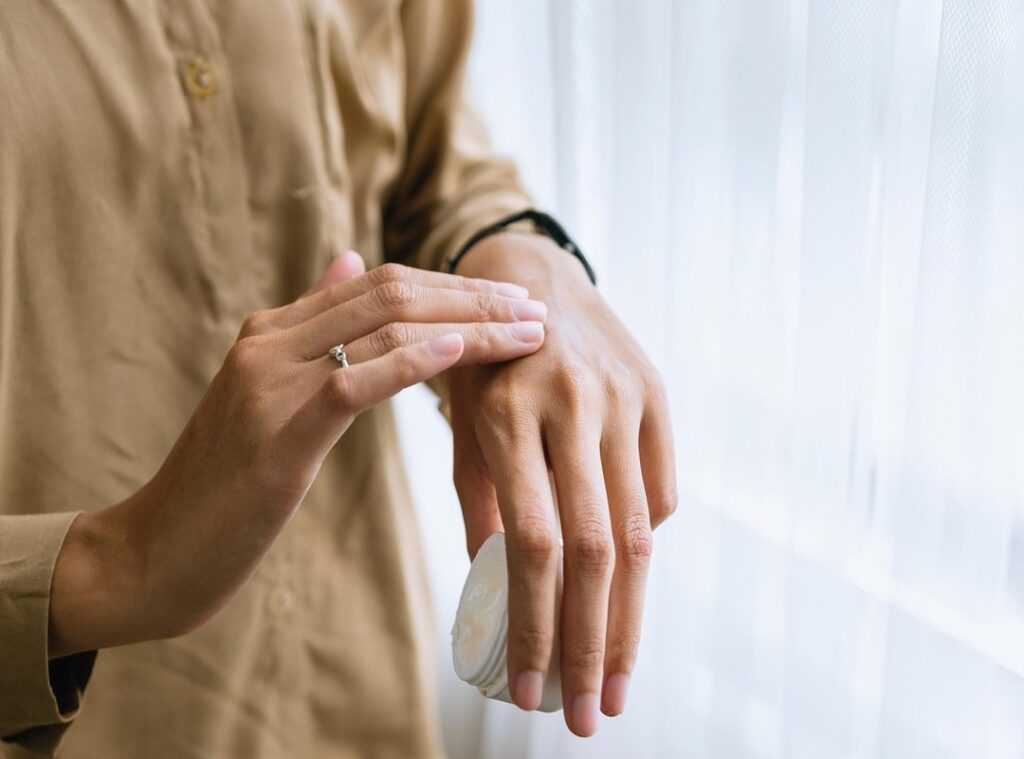

Think drinking more water is the secret to hydrated skin?
It helps. But it’s only one small piece of the puzzle.
Your skin is made up of about 70% water. However, the quantity you drink is not the biggest factor that determines how full, smooth or swollen it appears. Your body quietly runs a system that transfers fluid into and out of your skin daily.
And when that system slows down… no amount of water bottles will fix it.
Here’s how it really works.
Here’s what’s inside:
- Why Water Alone Won’t Hydrate Your Skin
- How Your Skin Actually Holds Fluid
- How Often Lymphatic Massage Makes Sense
- Simple Ways To Help Your Skin Balance Fluid
Why Water Alone Won’t Hydrate Your Skin
Most people think hydration is simple. Drink water, get glowing skin.
Studies disagree. One systematic review concluded that extra water only slightly helped skin hydration, with most improvements being among those with low initial water intake.
So if you already drink enough? Another 2x litres a day won’t change much.
Here’s why: Your skin doesn’t drink water from your glass. The water enters your bloodstream first. Your body then regulates where that water goes and how much comes in and out.
Pretty clever, right?
That means skin hydration depends on 3 things working together:
- Your blood vessels — pushing fluid out into the tissue
- Your skin barrier — holding moisture in
- Your lymphatic system — draining the extra fluid away
If one of these isn’t doing its job, your skin feels it.
That third one is the part most people don’t realise. When excess fluid builds up under your skin, many people wonder how frequently they should have lymphatic massage performed to release the fluid. Lymphatic drainage is a gentle, specialised body treatment that uses very light strokes to help shift that fluid towards your lymph nodes. How much time should go between treatments depends on how much fluid is being retained by your body (more on that below).
How Your Skin Actually Holds Fluid
Your skin isn’t a flat covering on your body. It’s composed of living tissue loaded with blood vessels, cells, and a gel-like space between your cells.
That space is referred to as the interstitial space. This is where the majority of your skin fluid resides.
The Fluid Leak (That’s Supposed To Happen)
Every day, tiny blood vessels leak fluid into your tissues. This is normal. That’s how your cells receive oxygen and nutrients.
Most of that fluid gets reabsorbed directly into your blood. Per the Cleveland Clinic, about 17 liters of plasma are returned to your bloodstream this way daily.
But not all of it makes it back…
The Lymphatic Drain
Where does the remaining fluid (about 3 litres daily) go? Your lymphatic system cleans that up. Consider it akin to the storm drains under a city — gathering up the excess fluid and returning it to your blood.
Here’s the catch…
Your lymphatic system has no heart to pump it.
It depends on movement, respiration and muscle contractions to pump fluid through the system. Sitting all day, sleeping poorly or eating too much salt causes these drains to become sluggish. Fluid retention occurs and your skin can appear swollen, dull or tight.
Think about it:
When the drains beneath a city become clogged, streets are flooded with water. Skin behaves similarly. Unblock the drains, the “flooding” subsides.
That is exactly what lymphatic drainage massage seeks to accomplish. It is also NOT a deep tissue massage. The pressure is light as the lymph vessels are just beneath your skin surface.
Why Skin Holds Onto Too Much (Or Too Little) Fluid
Balanced skin isn’t too wet or too dry. It sits right in the middle.
But daily habits can tip it either way. The most common triggers are:
- Sitting or standing still for hours
- High-salt meals
- Hot weather and flights
- Hormone changes
- Poor sleep
Salt. A huge issue. Your body retains water in order to dilute excess sodium. That’s why you might wake up bloated after a night of takeaways.
Furthermore,when your skin barrier isn’t strong, water can pass from your skin into the atmosphere. Strong soaps, hot showers and dry air-conditioning can remove the oils that help seal in moisture. The result? Skin can be left parched on the surface – despite adequate hydration.
Same body. Two very different problems.
How Often Lymphatic Massage Makes Sense
So, how often should you book one?
It depends. It really varies on what you are getting it for. However, here is a loose guideline that most therapists follow:
- For a reset: 1x session a week for 4-6 weeks
- For upkeep: once every 2-4 weeks
- After surgery or with swelling: follow your doctor’s plan
Frequency makes sense in the beginning when fluid has been accumulating. After everything settles, you can stretch out sessions.
However, don’t overdo it! More isn’t always better. The lymphatic system operates at its own speed and schedule and sometimes less frequent, well-timed sessions will be more effective than one each day.
And remember…
Massage is most effective when used in combination with healthy habits — rather than as a substitute for them. If you have heart, kidney or blood clotting problems please consult your GP before lymphatic drainage.
Simple Ways To Help Your Skin Balance Fluid
Here’s some good news. You can help your skin maintain hydration starting at home today.
Move hourly. Walk for just 5 minutes to get your muscles contracting and your lymph moving. Calves are a second pump for your legs.
Take a deep breath. Deep abdomen breathing alters the pressure within your thoracic cavity, and draws lymph upward. It costs nothing and can be done anywhere.
Monitor your salt intake. Reduce processed and fast foods. The less salt you eat, the less fluid volume your body will retain.
Preserve your skin barrier function. Be gentle to your skin. Wash with a mild cleanser and use a quality moisturiser. Try to find products with:
- Glycerin
- Hyaluronic acid
- Ceramides
Eat your water. Cucumber, watermelon, oranges and leafy greens all contain water plus minerals your body needs to regulate hydration.
And yes… drink your water. But don’t think it’s going to carry all the load for you.
The Bottom Line On Skin Hydration
Dry skin isn’t only related to your water intake. It’s how your body transports hydration into your skin, retains it where it should be and excretes the excess.
To quickly recap:
- Water goes to your blood first, not your skin
- Your lymphatic system drains the extra fluid
- Salt, stillness and a weak barrier throw things off
- Lymphatic massage can help get fluid moving again
- Daily movement and good skincare keep it balanced
Get those basics right and your skin will thank you for it.
Keep it simple. Keep it moving.
 Head of Skincare Research & Development
Olivia M. writes the kind of advanced makeup formulations content that people actually send to each other. Not because it's flashy or controversial, but because it's the sort of thing where you read it and immediately think of three people who need to see it. Olivia has a talent for identifying the questions that a lot of people have but haven't quite figured out how to articulate yet — and then answering them properly.
They covers a lot of ground: Advanced Makeup Formulations, Everyday Beauty Hacks, Expert Breakdowns, and plenty of adjacent territory that doesn't always get treated with the same seriousness. The consistency across all of it is a certain kind of respect for the reader. Olivia doesn't assume people are stupid, and they doesn't assume they know everything either. They writes for someone who is genuinely trying to figure something out — because that's usually who's actually reading. That assumption shapes everything from how they structures an explanation to how much background they includes before getting to the point.
Beyond the practical stuff, there's something in Olivia's writing that reflects a real investment in the subject — not performed enthusiasm, but the kind of sustained interest that produces insight over time. They has been paying attention to advanced makeup formulations long enough that they notices things a more casual observer would miss. That depth shows up in the work in ways that are hard to fake.